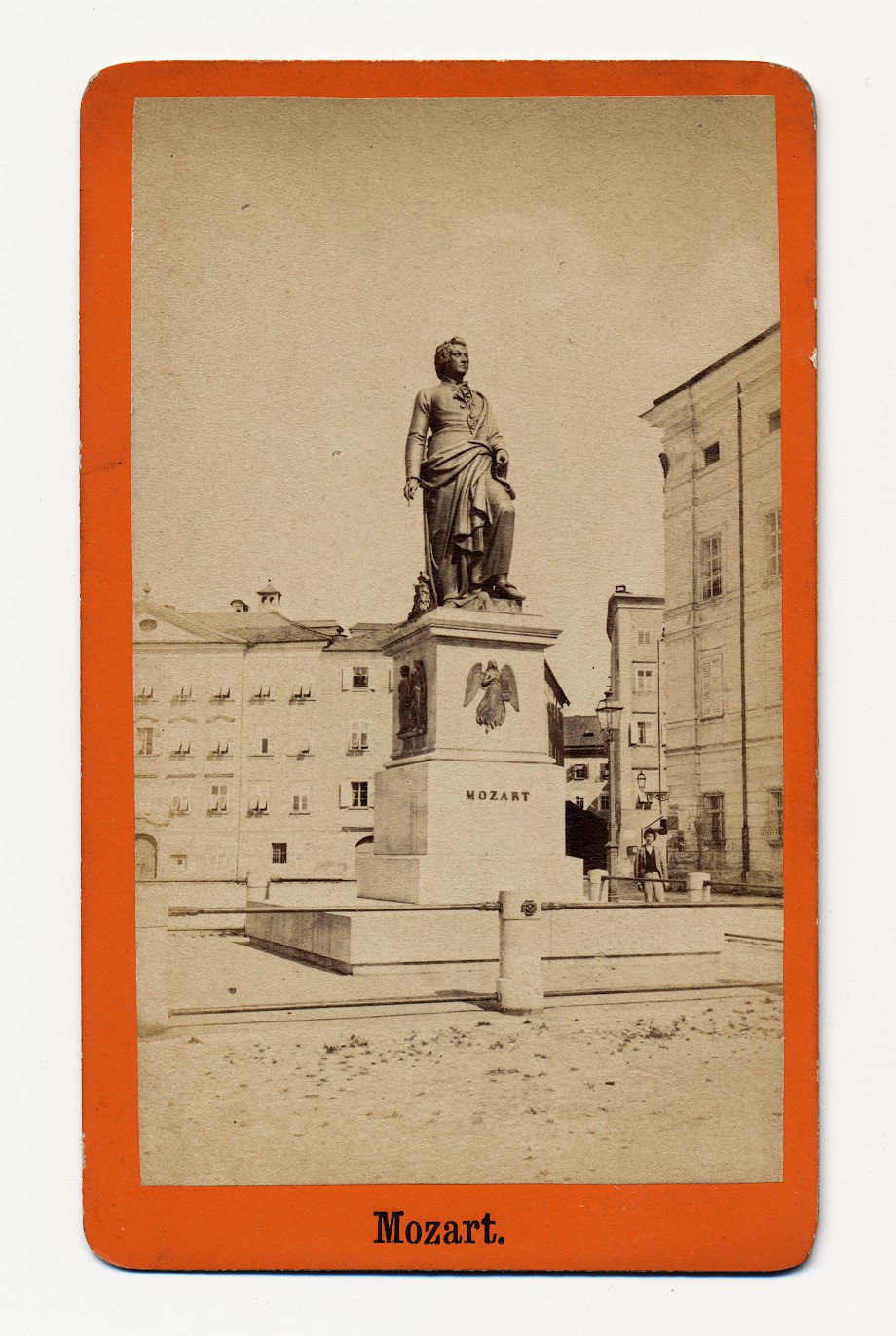
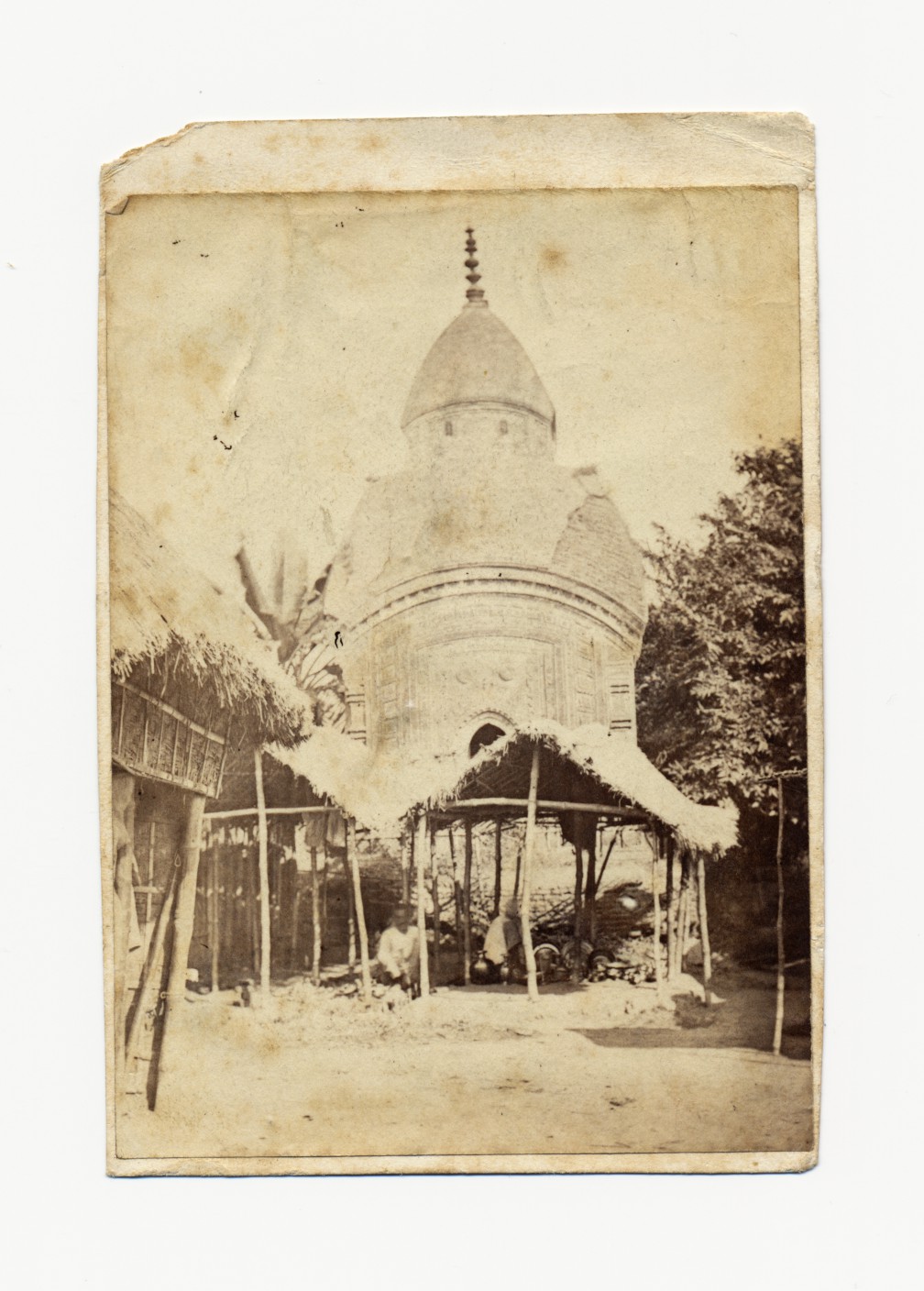
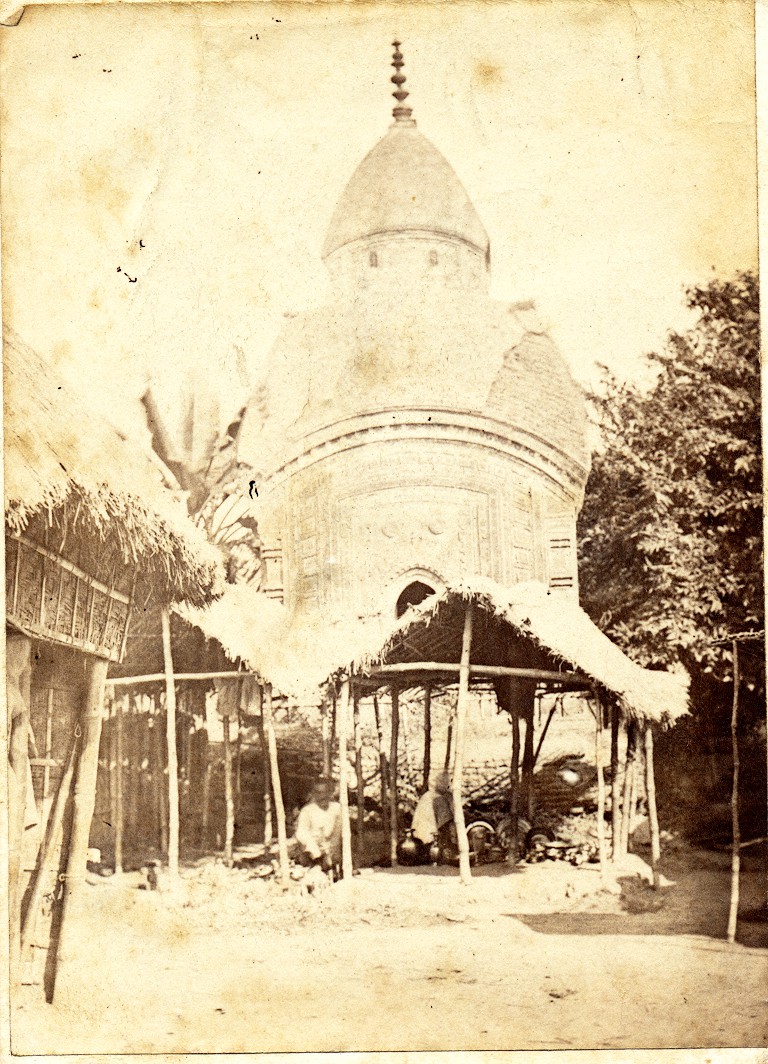
A domed temple with thatched awnings in front; the architecture (curved cornice, terracotta-like ornament) is reminiscent of a Bengali/Indian temple. Photographer unknown.
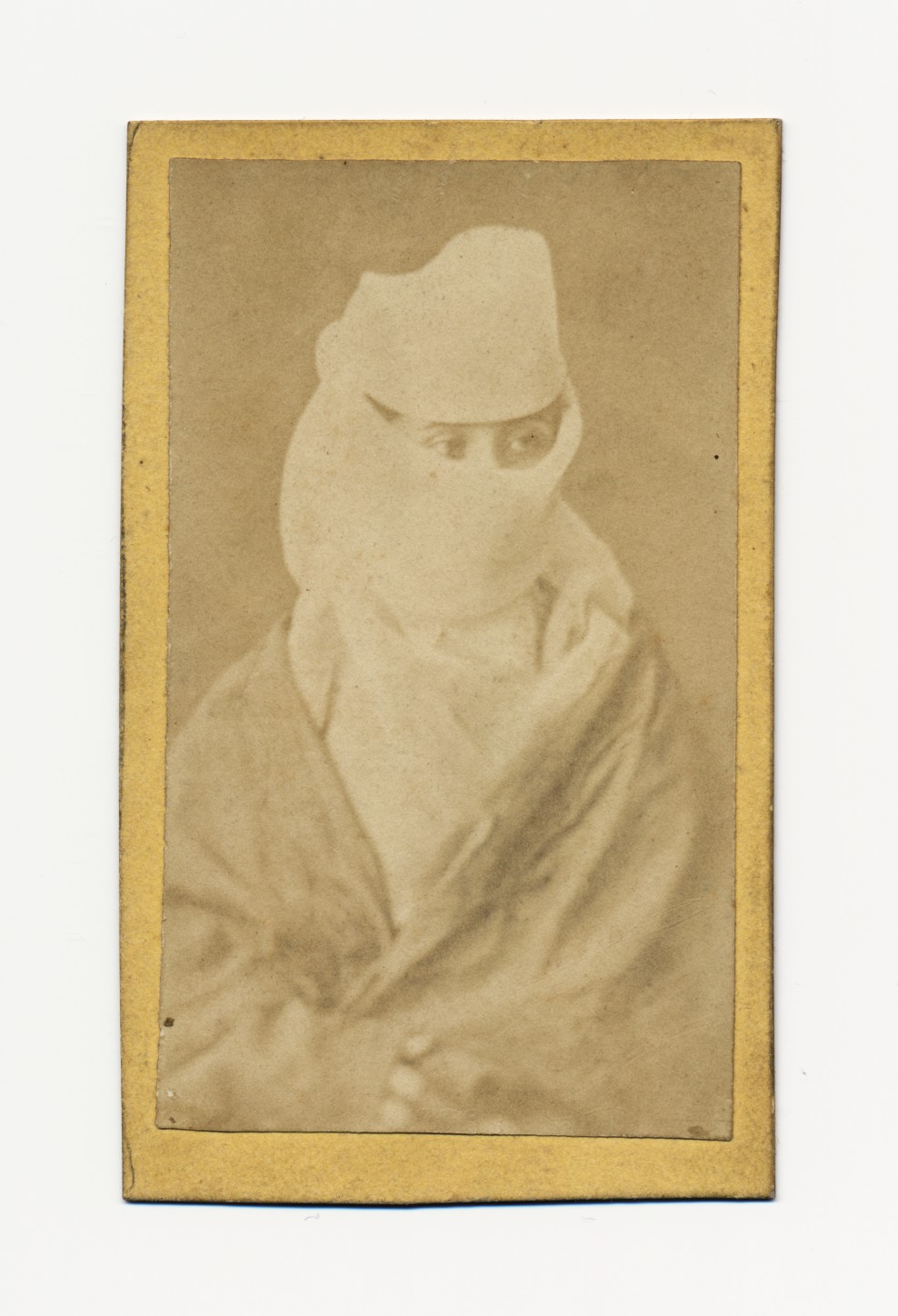
A fully veiled person in white robes, only the eyes visible — probably an orientalist ‘type’ photograph. Photographer and origin cannot be further determined.
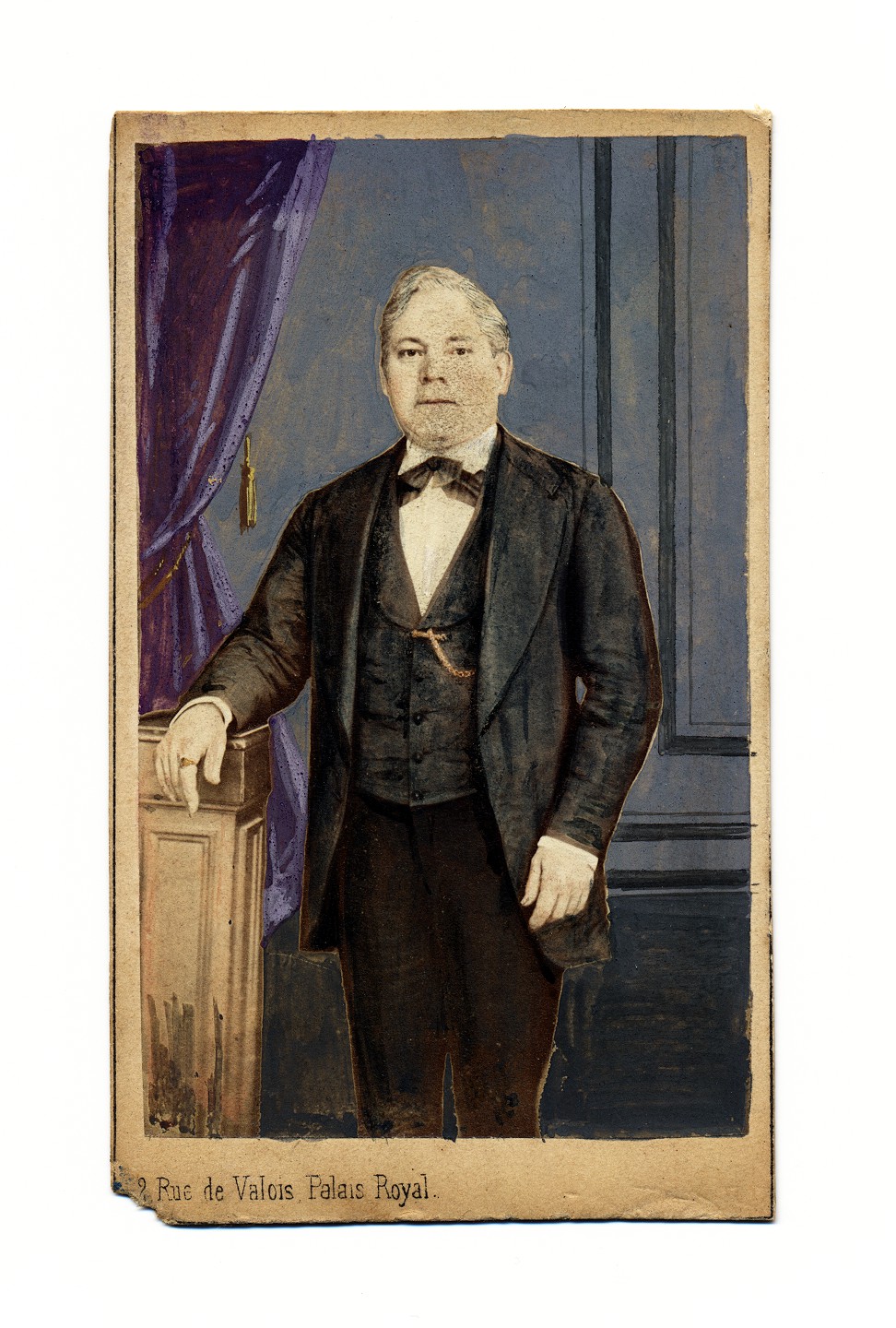
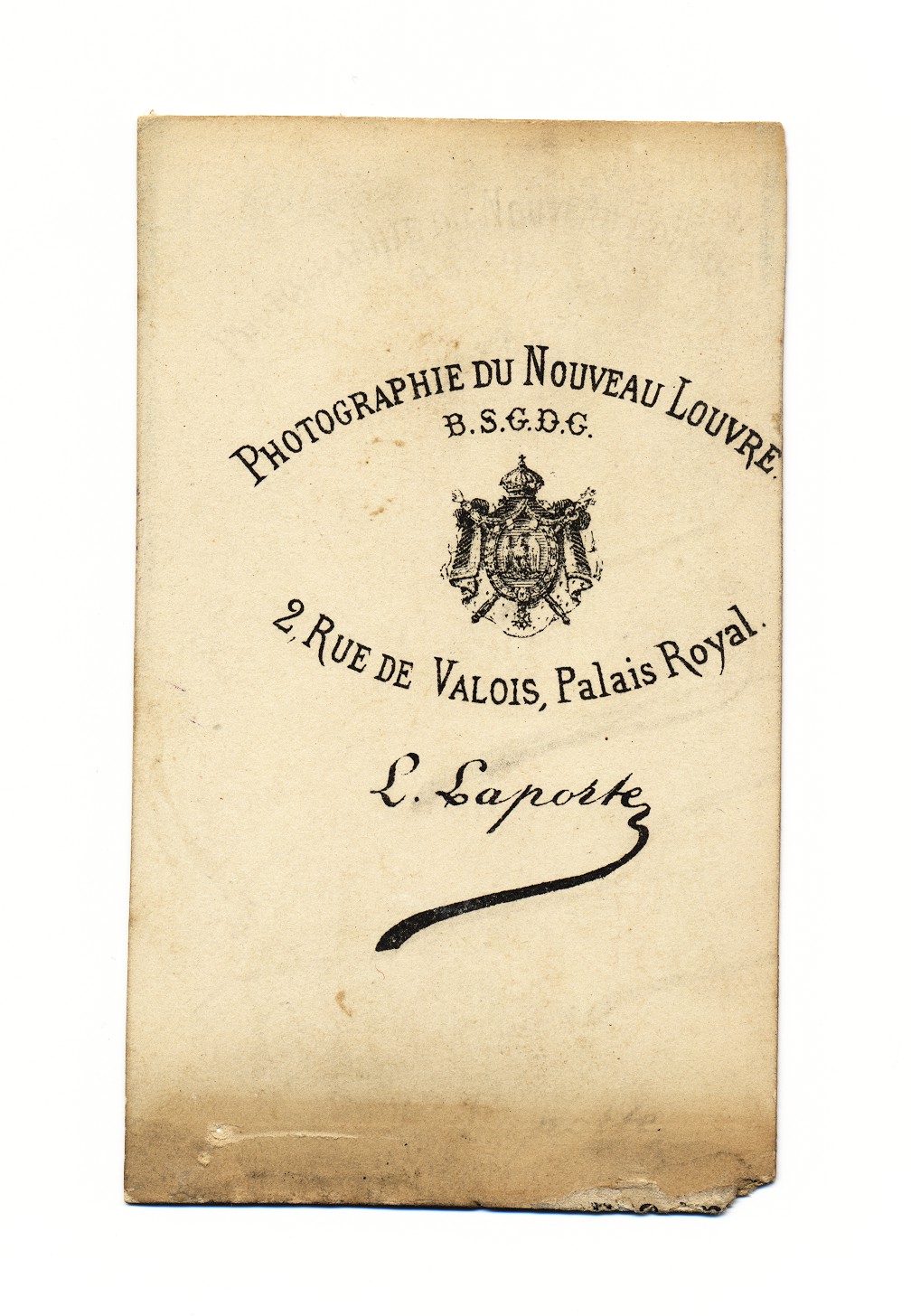
A finely hand-coloured carte de visite of a gentleman, produced by Léon Charles Laporte, a Paris photographer active during the Second French Empire, studio ‘Photographie du Nouveau Louvre’ on the Rue de Valois/Palais Royal. Name not known.
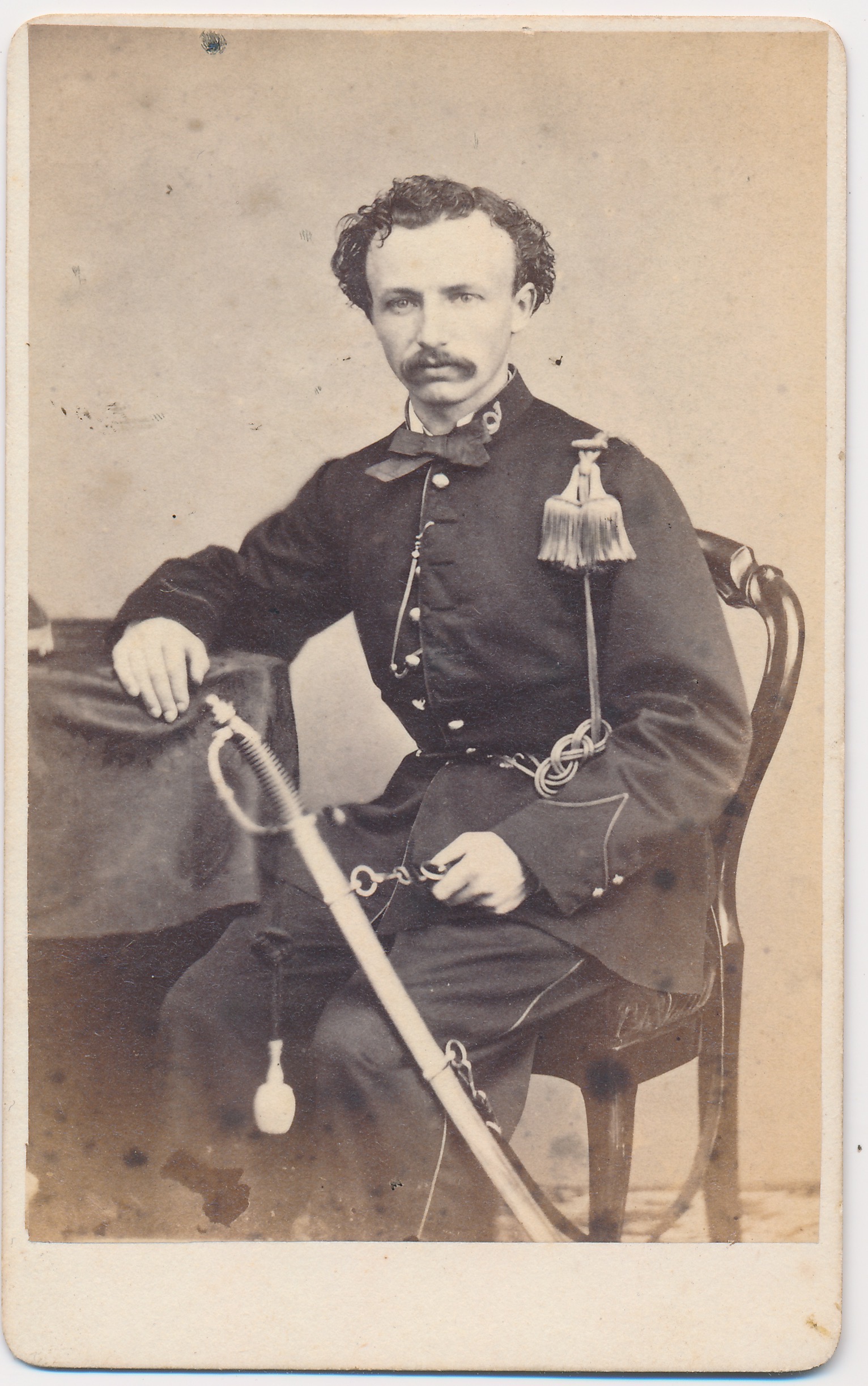
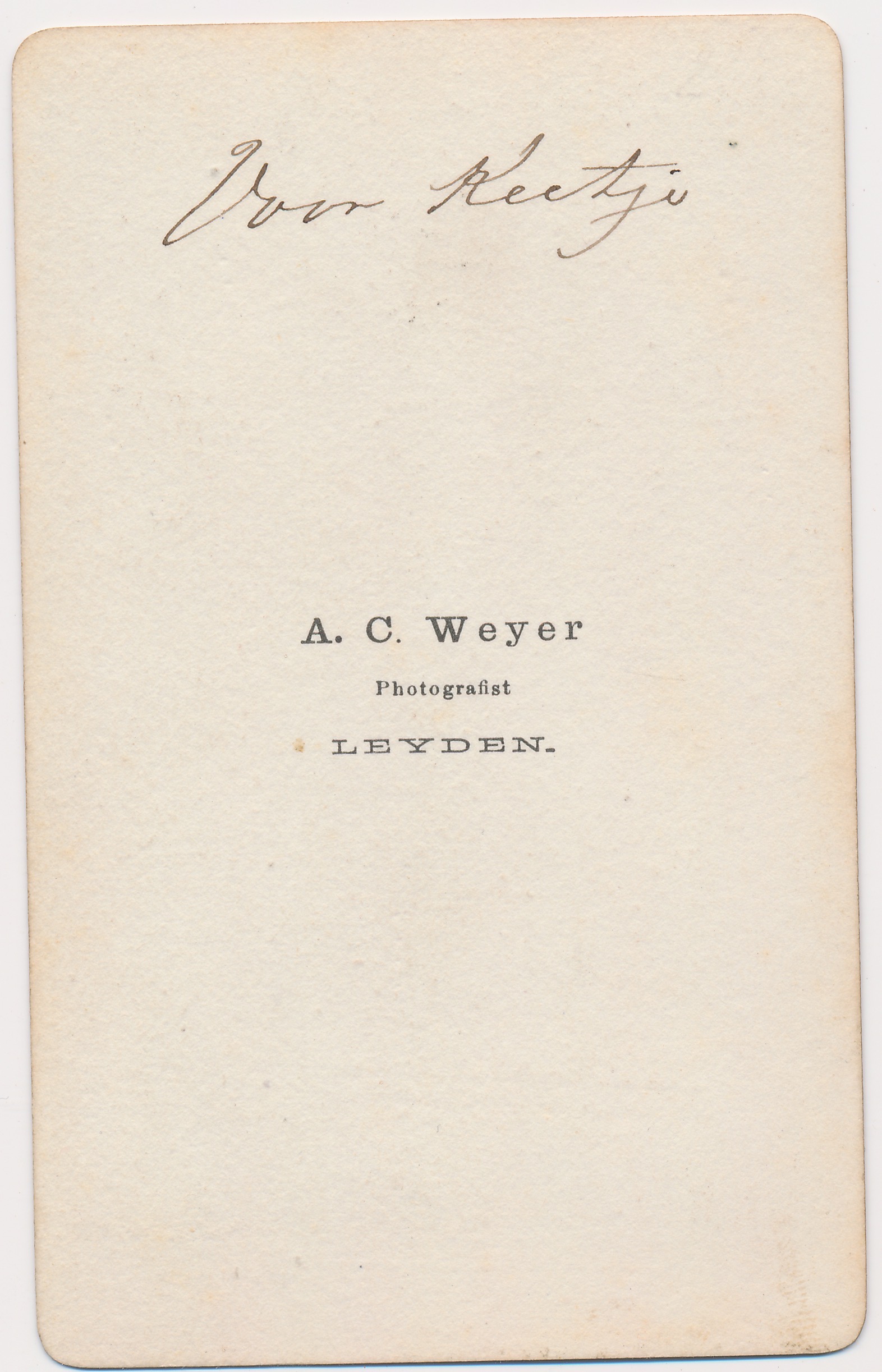
This carte de visite carries a personal dedication on the back: ‘Voor Keetje’ (‘For Keetje’) — a gift photograph for a loved one. The sitter herself is not named. Produced by A.C. Weyer, photographist in Leiden.
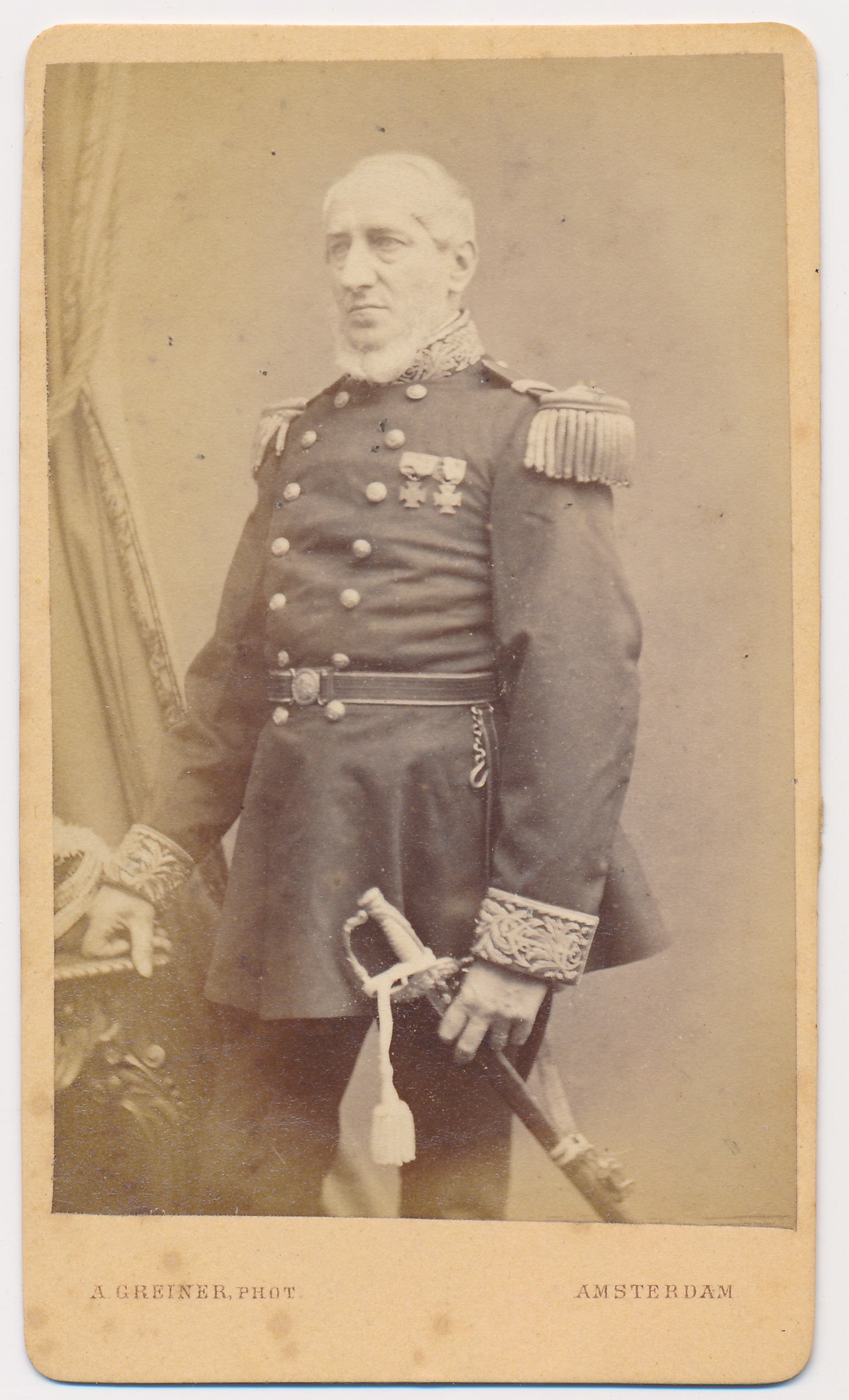
The sitter has not yet been identified. The photo was produced by Albert Greiner (1833–1890), renowned court photographer to King Willem III and the queen dowager (court title since 1879), studio on the Nieuwendijk in Amsterdam.
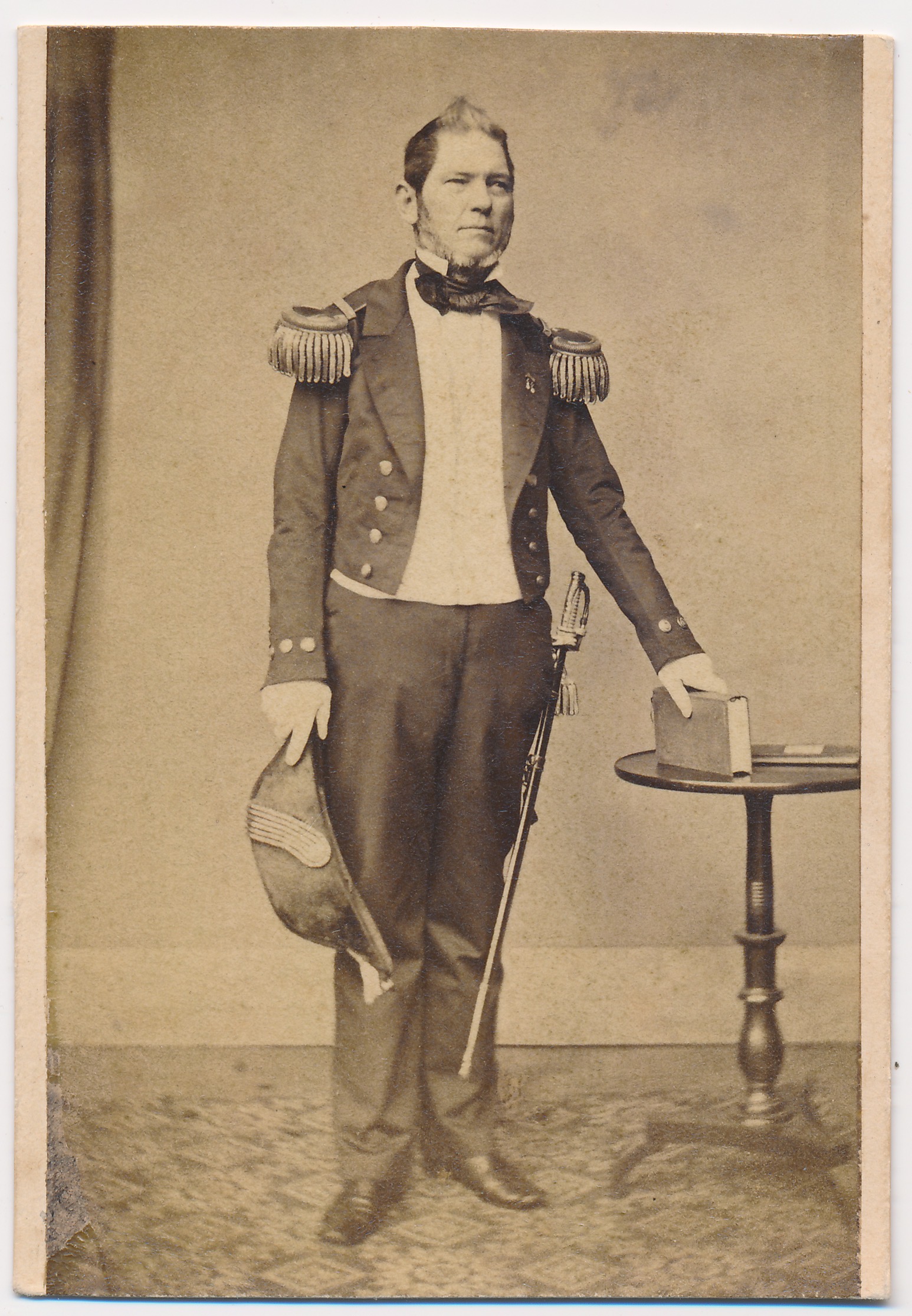
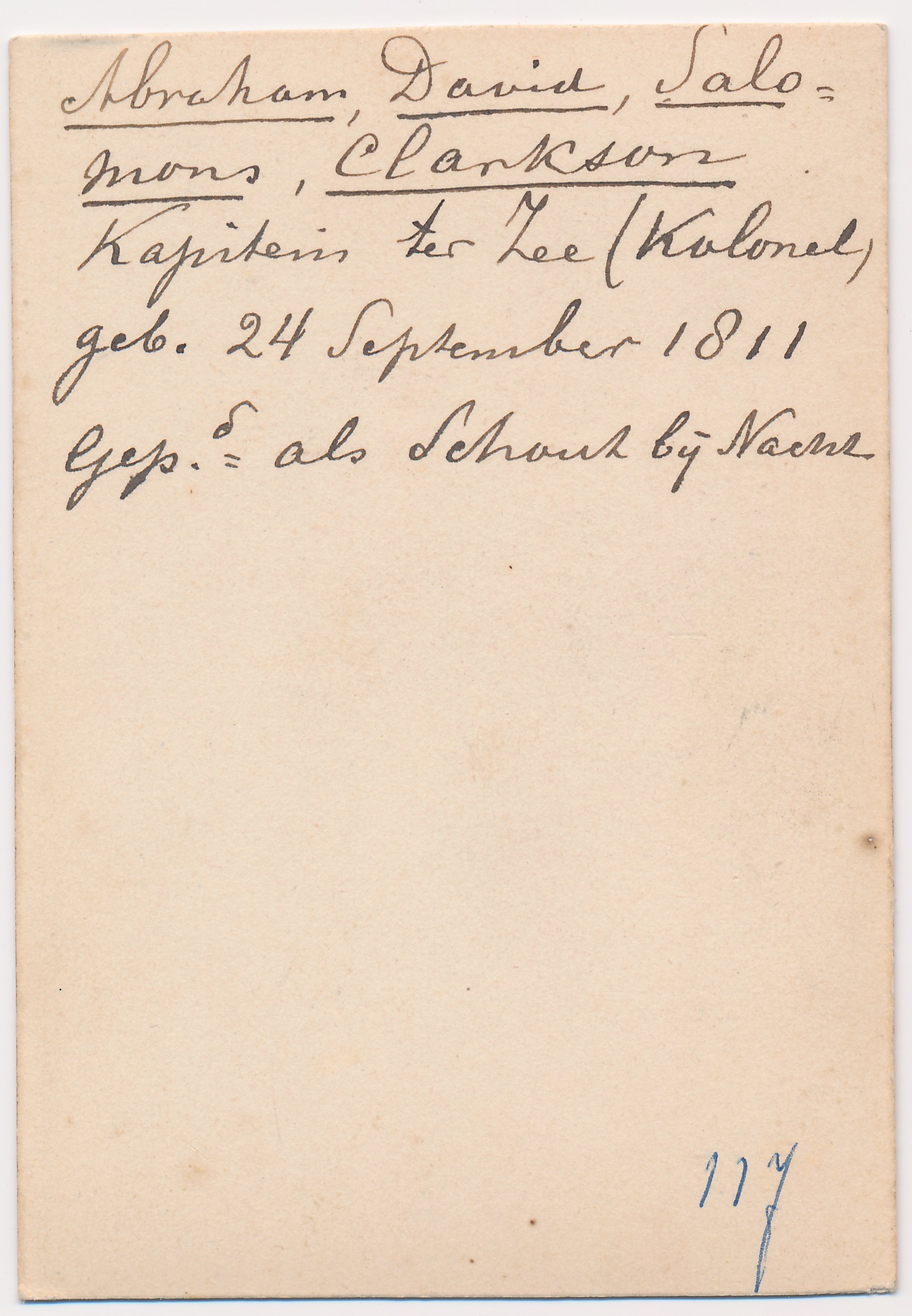
Abraham David Salomons Clarkson was born in 1811 on Sint Eustatius and died on 4 November 1876 in Bergen op Zoom, aged 65. Noted on the card as a retired rear admiral (schout-bij-nacht: captain-at-sea/colonel rank); elsewhere recorded as second lieutenant-at-sea, probably an earlier career step. The photograph was taken on Sint Eustatius; a studio stamp is absent.
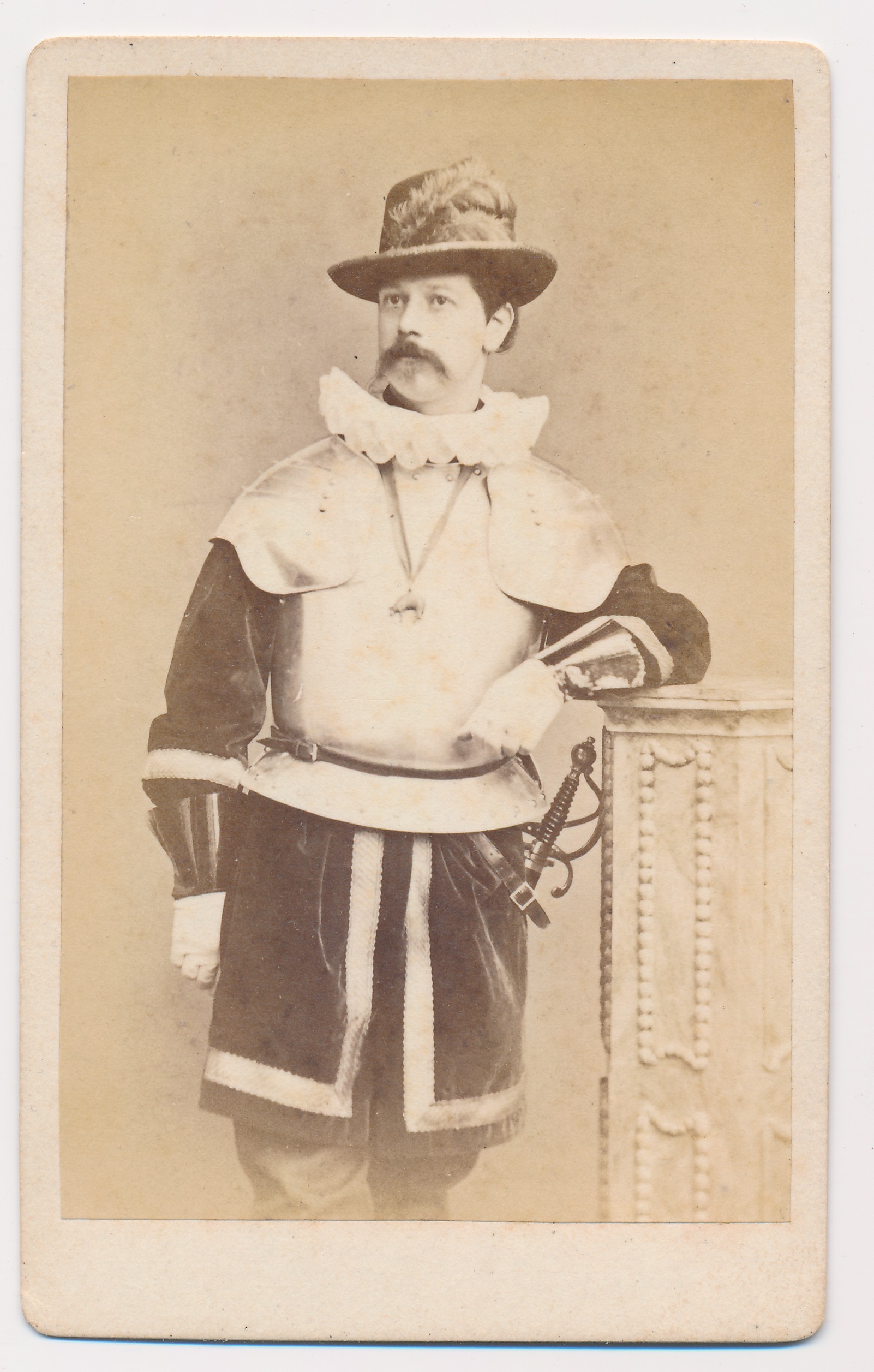
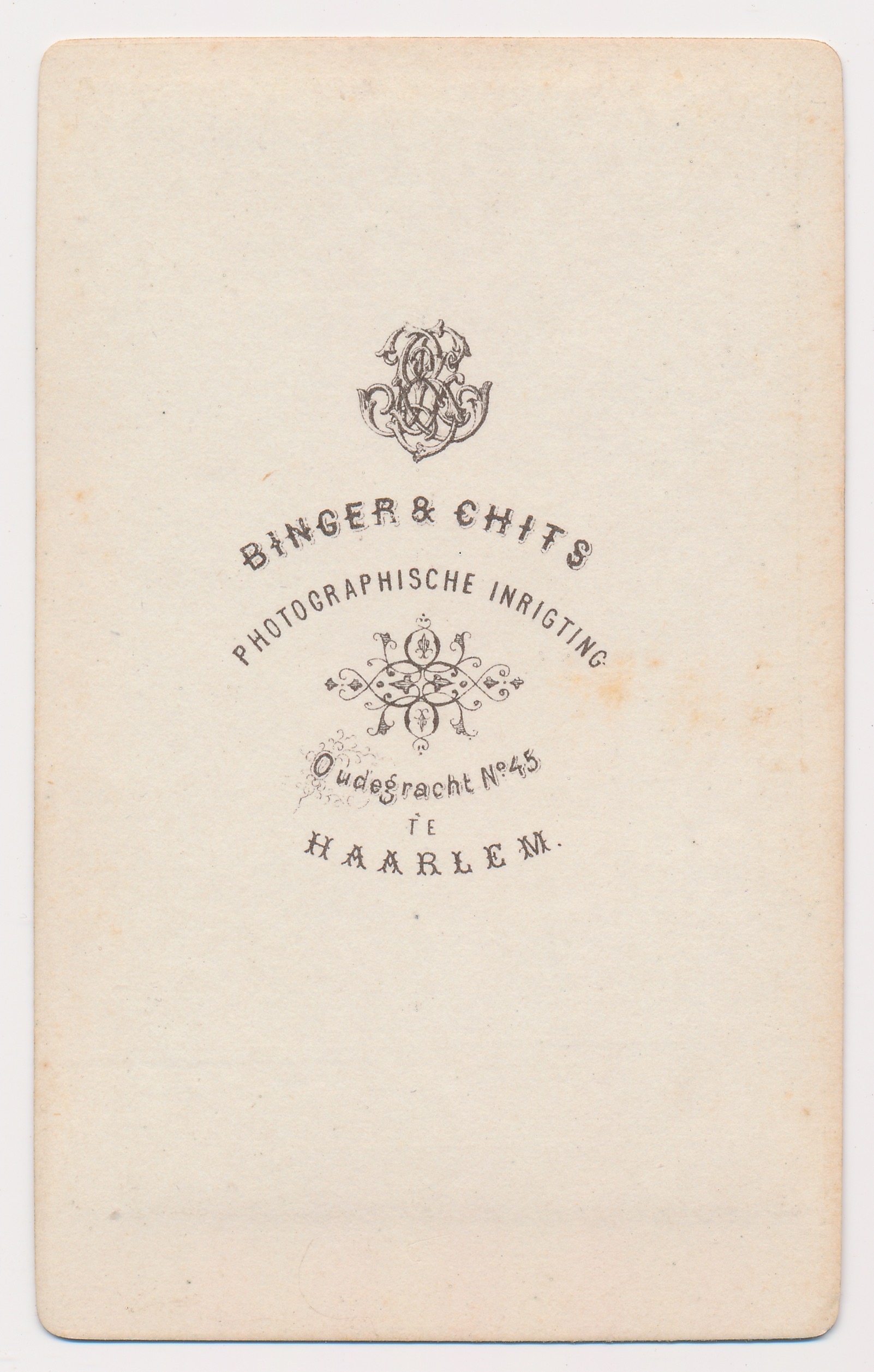
This carte de visite shows a costume portrait — probably for a masked ball or fancy-dress party, with a plumed hat, collar and cuirass inspired by 16th/17th-century clothing. The sitter is not identified. Produced by Binger & Chits, the partnership of Charles Binger and Jacques Chits from 1871, Oudegracht, Haarlem.
The studio Binger & Chits in Haarlem was one of the later firm names of the portrait business of Charles Binger (1830–1916), which operated on the Zijlstraat until 1891 (source: RKD).
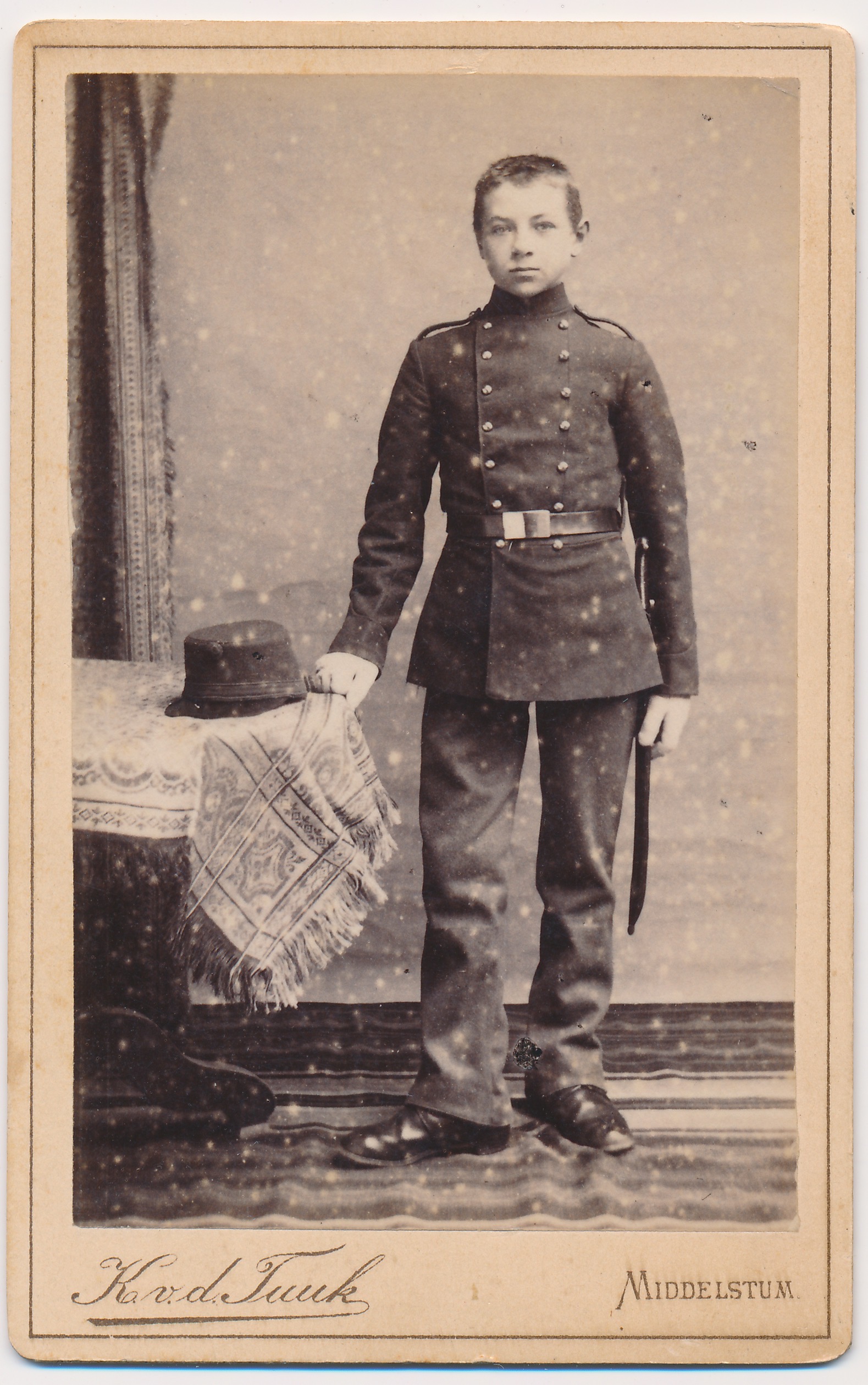
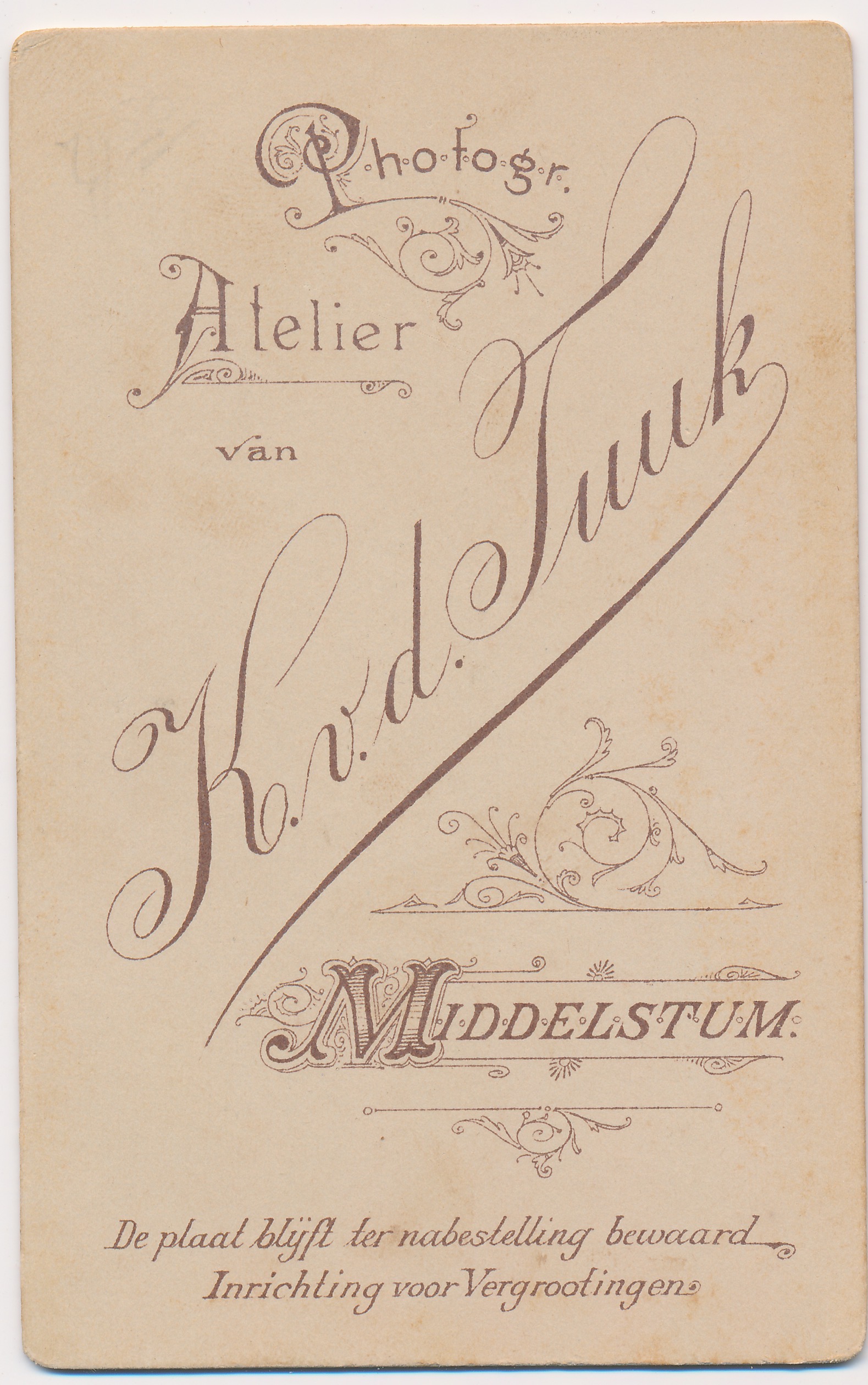
The boy in this carte de visite, dressed in a cadet-like uniform, has not yet been identified. The photo was produced by Klaas van der Tuuk (1853–1923), photographer in Middelstum, Groningen.
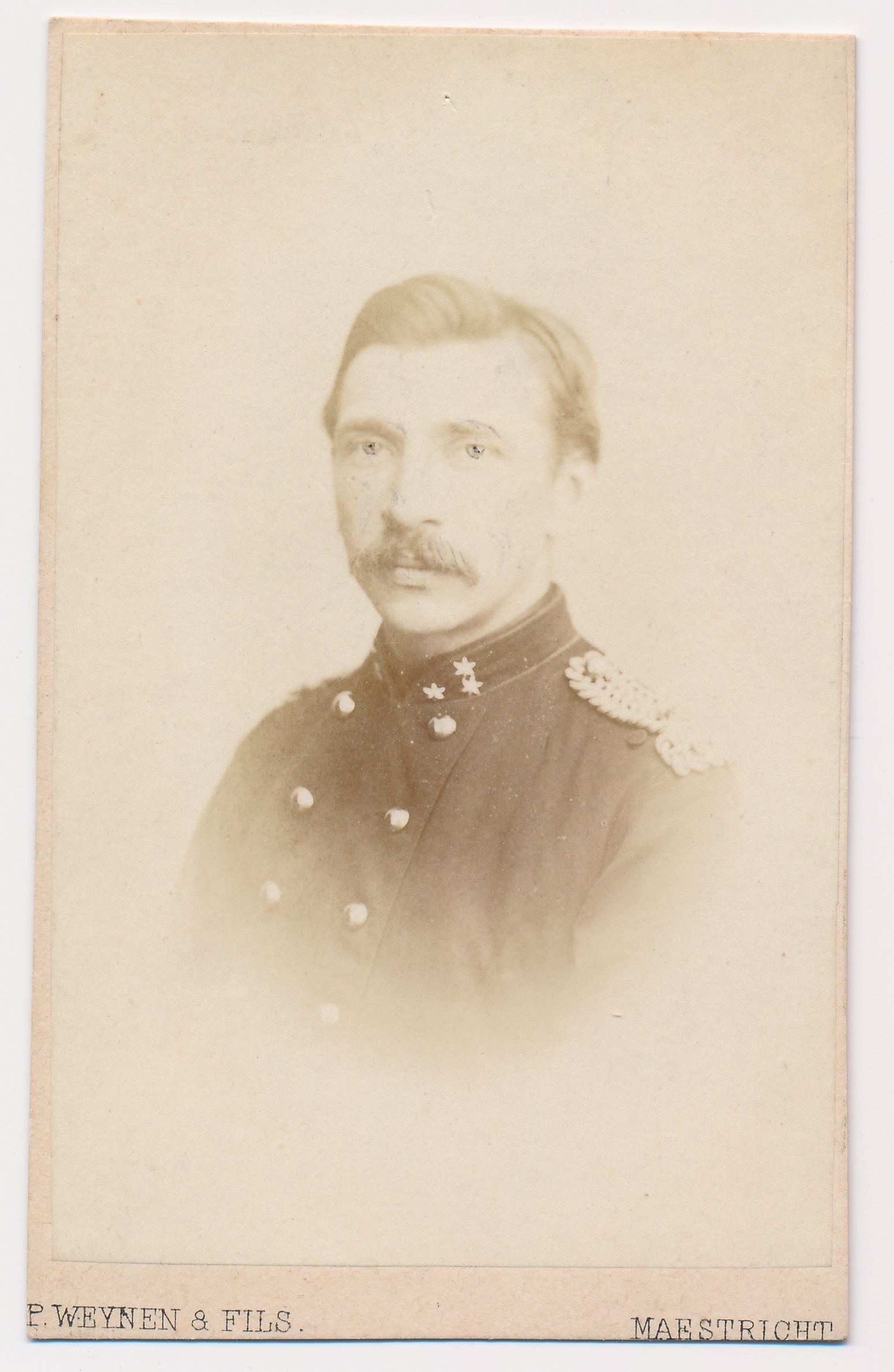
The sitter has not yet been identified. The photo was produced by P. Weynen & Fils, the studio of Peter Weynen (1804–1877) and his son Theodor Weynen (1835–1904), one of the pioneering families of photography in Maastricht, studio opened in 1855.
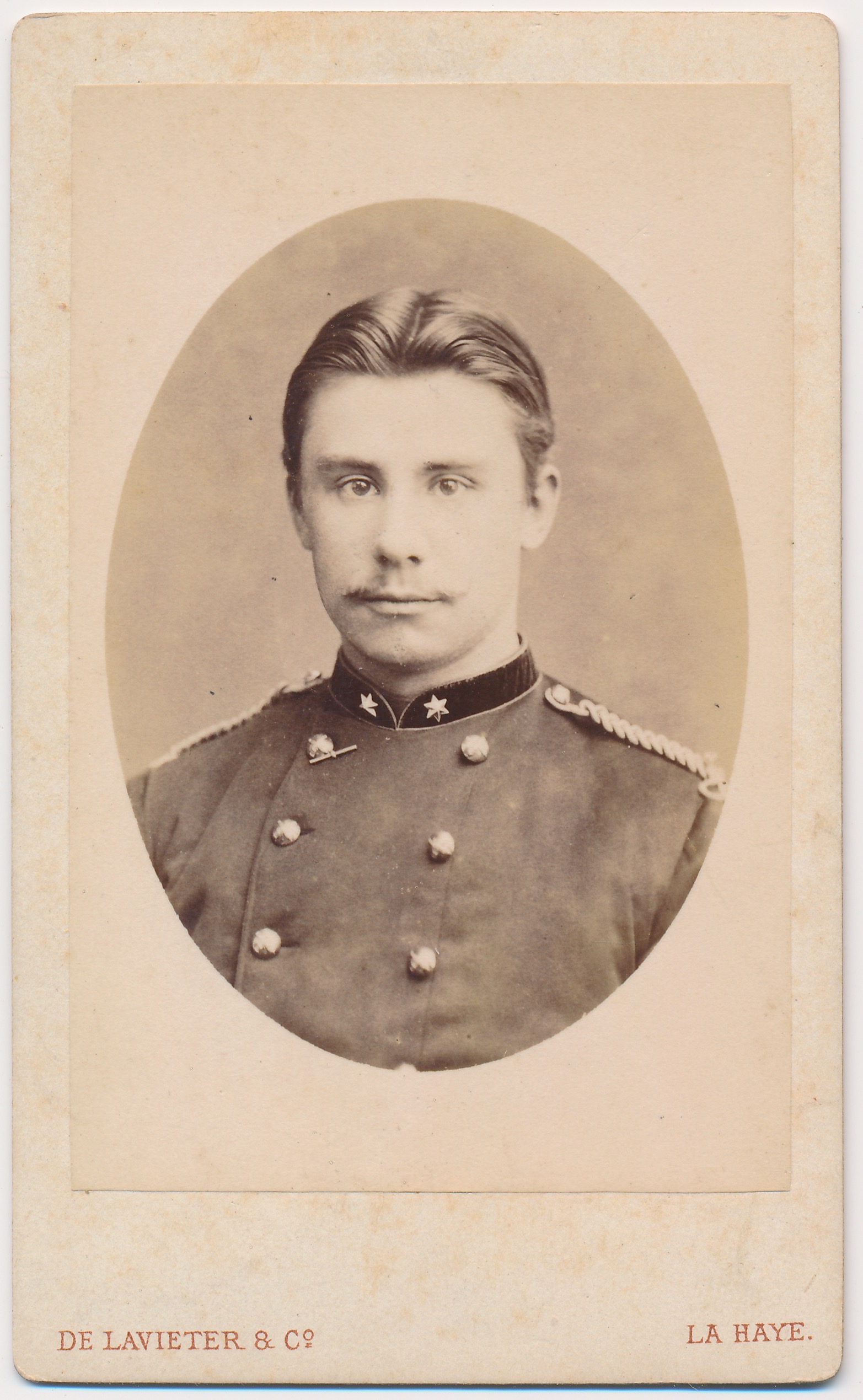
The sitter has not yet been identified. The photo was produced by De Lavieter & Co, the studio of Johannes Lodewijk de Lavieter (1839–1910), court photographer from 1877, on the Willemstraat in The Hague.
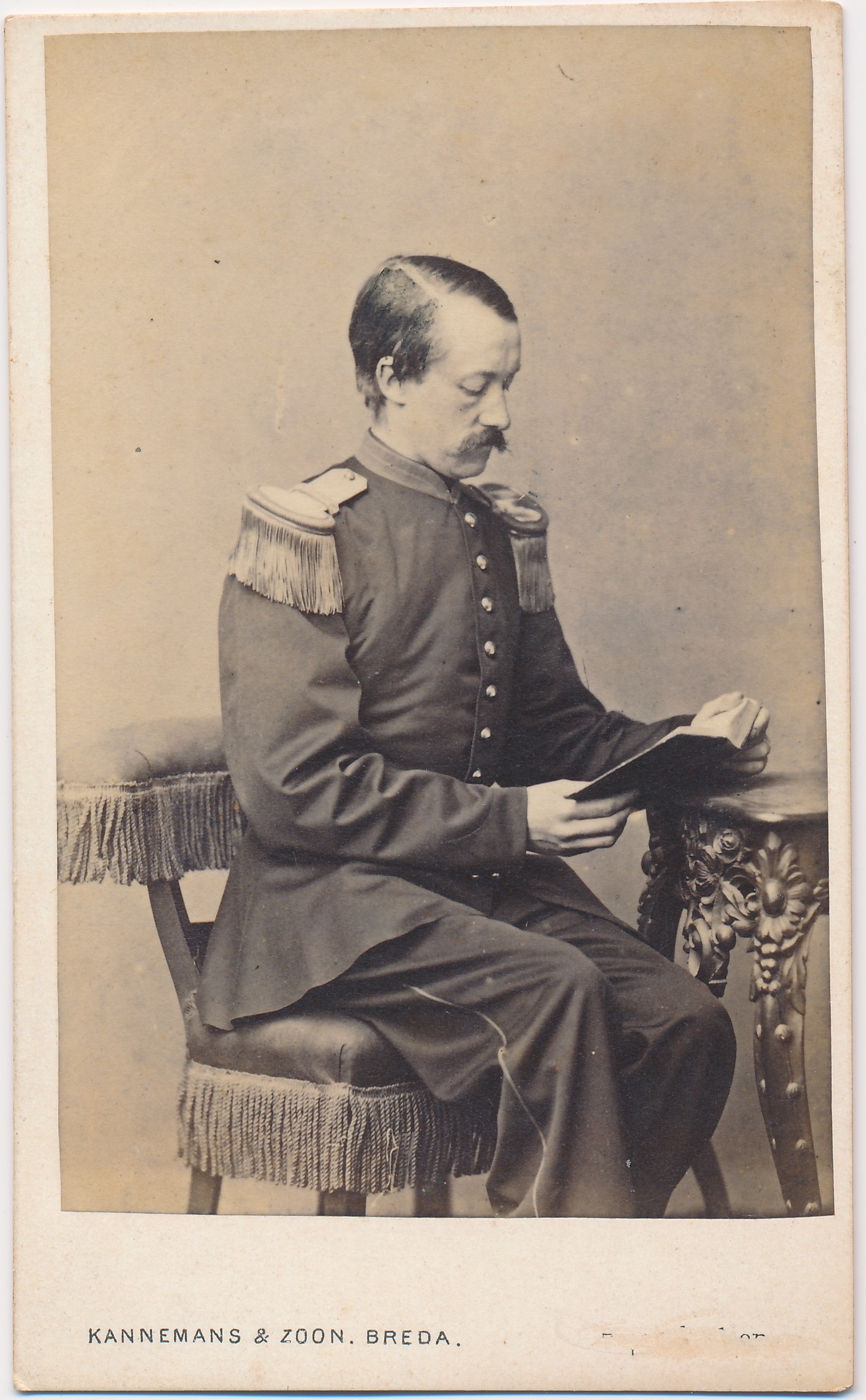
The sitter has not yet been identified. The photo was produced by Kannemans & Zoon, the studio of Christiaan Cornelis Kannemans (1812–1884) and his son Willebrord, purveyors to the court on the Grote Markt in Breda — a regular address for portraits of cadets from the Royal Military Academy.
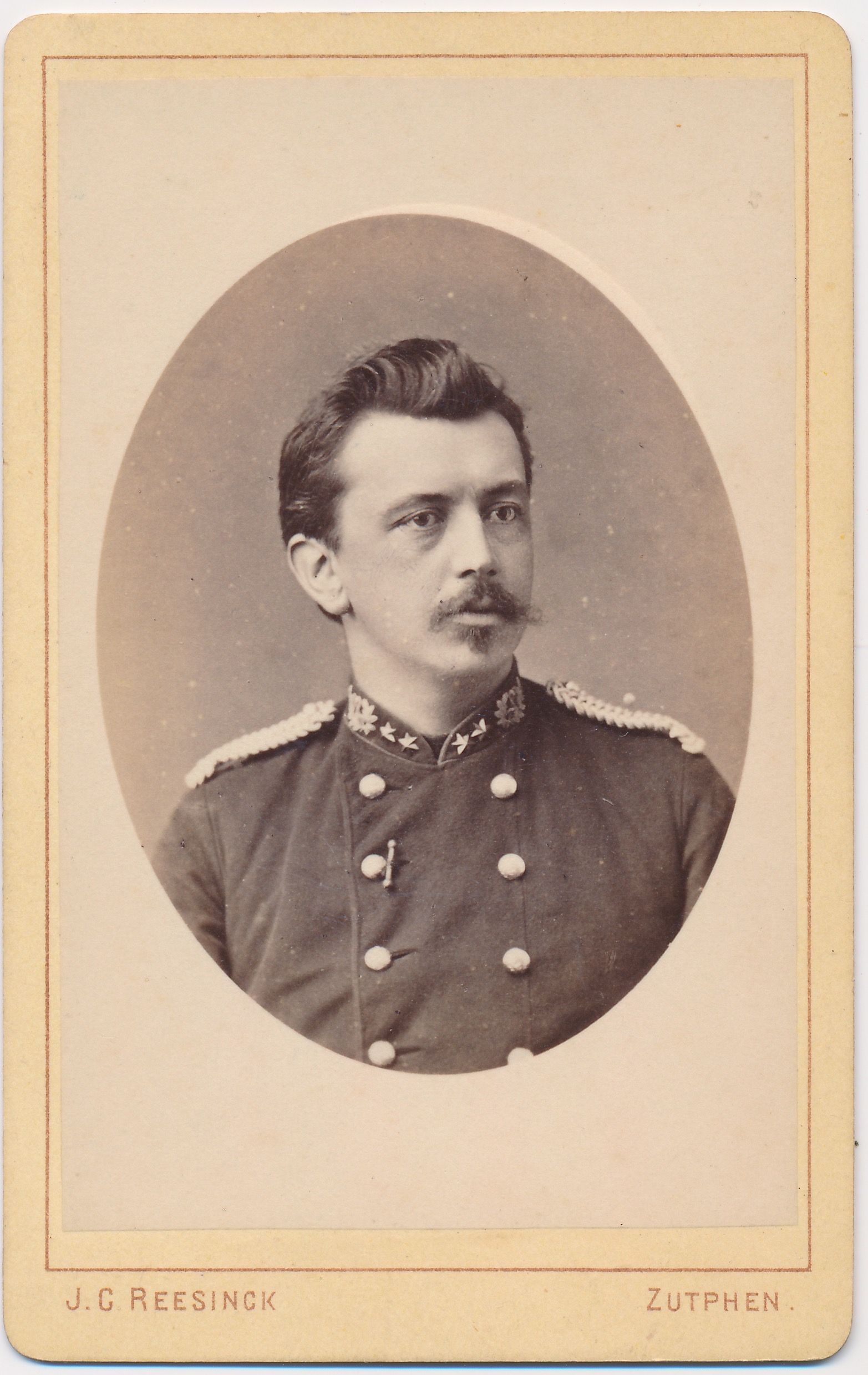
The sitter in this carte de visite has not yet been identified. The photo was produced by Johan Christiaan Reesinck (1855–1910), photographer and purveyor to the court in Zutphen; the address on the card (Berkelkade B 313) points to an early period in his career, circa 1871–1879.
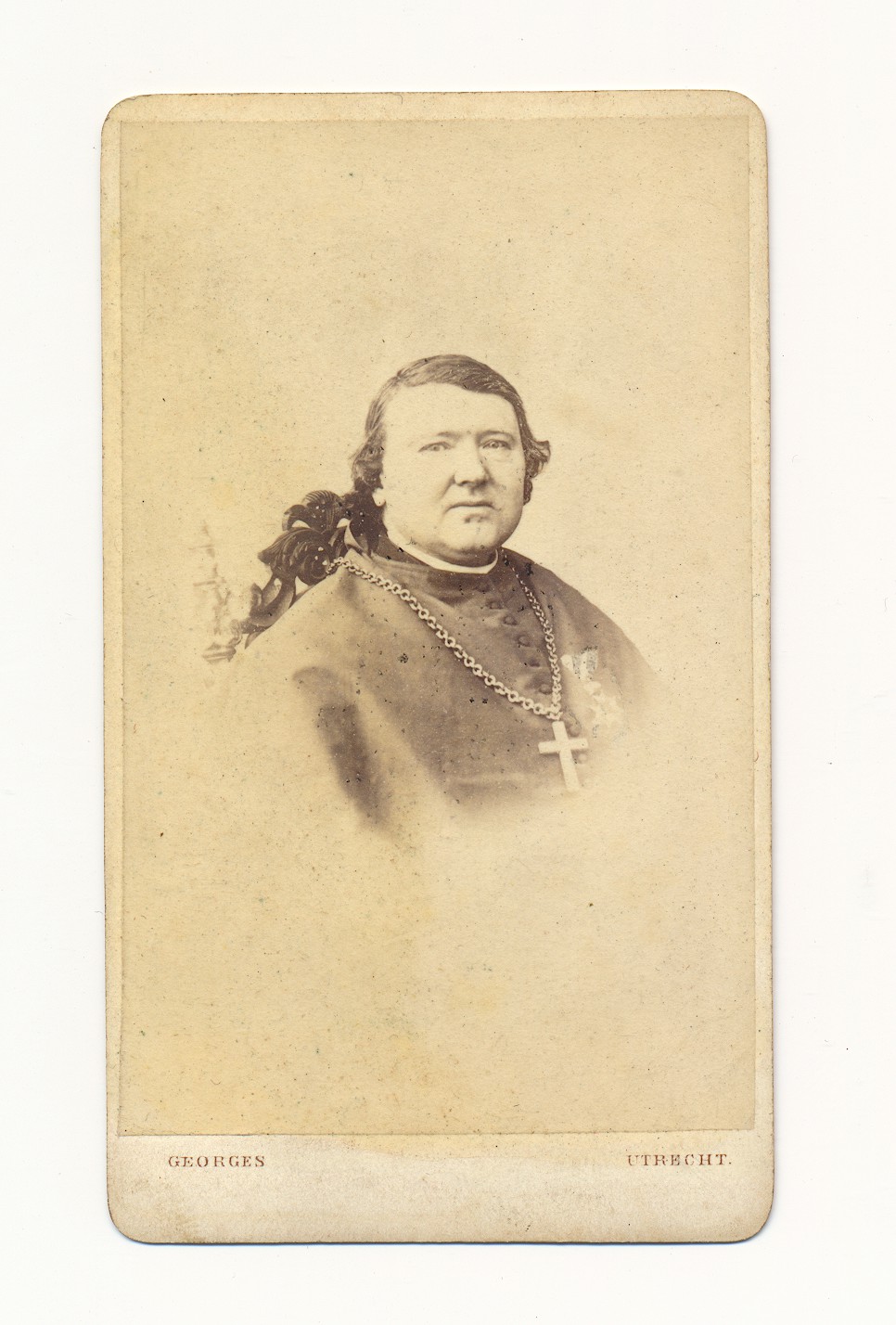
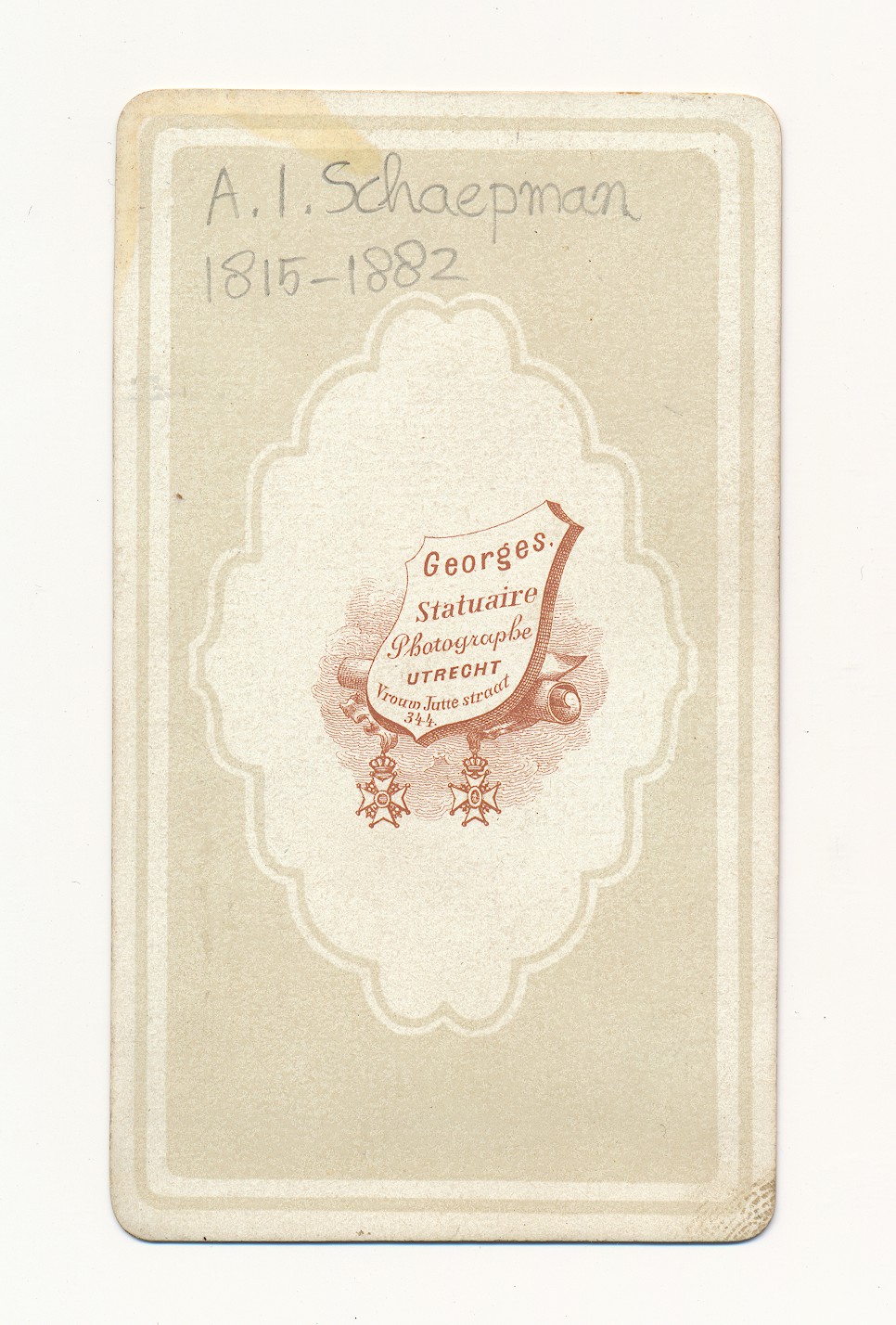
Andreas Ignatius Schaepman (Zwolle, 4 September 1815 – Utrecht, 19 September 1882) was ordained a priest in 1838 and served successively as chaplain in Zwolle, parish priest in Assen and in Zwolle, president of the Rijsenburg seminary (1857), vicar-general (1858) and dean of Utrecht (1860). In 1868 he became Archbishop of Utrecht. He promoted Catholic education and liturgical renewal — he founded the Sint-Gregoriusvereniging for church singing — supported neo-Gothic church building, founded the congregation of the Fraters van Utrecht in 1873, and took part in the First Vatican Council. He was a great-uncle of the priest-politician Herman Schaepman. Produced by Georges, Statuaire Photographe, Utrecht. Name and dates are written in pencil on the back.
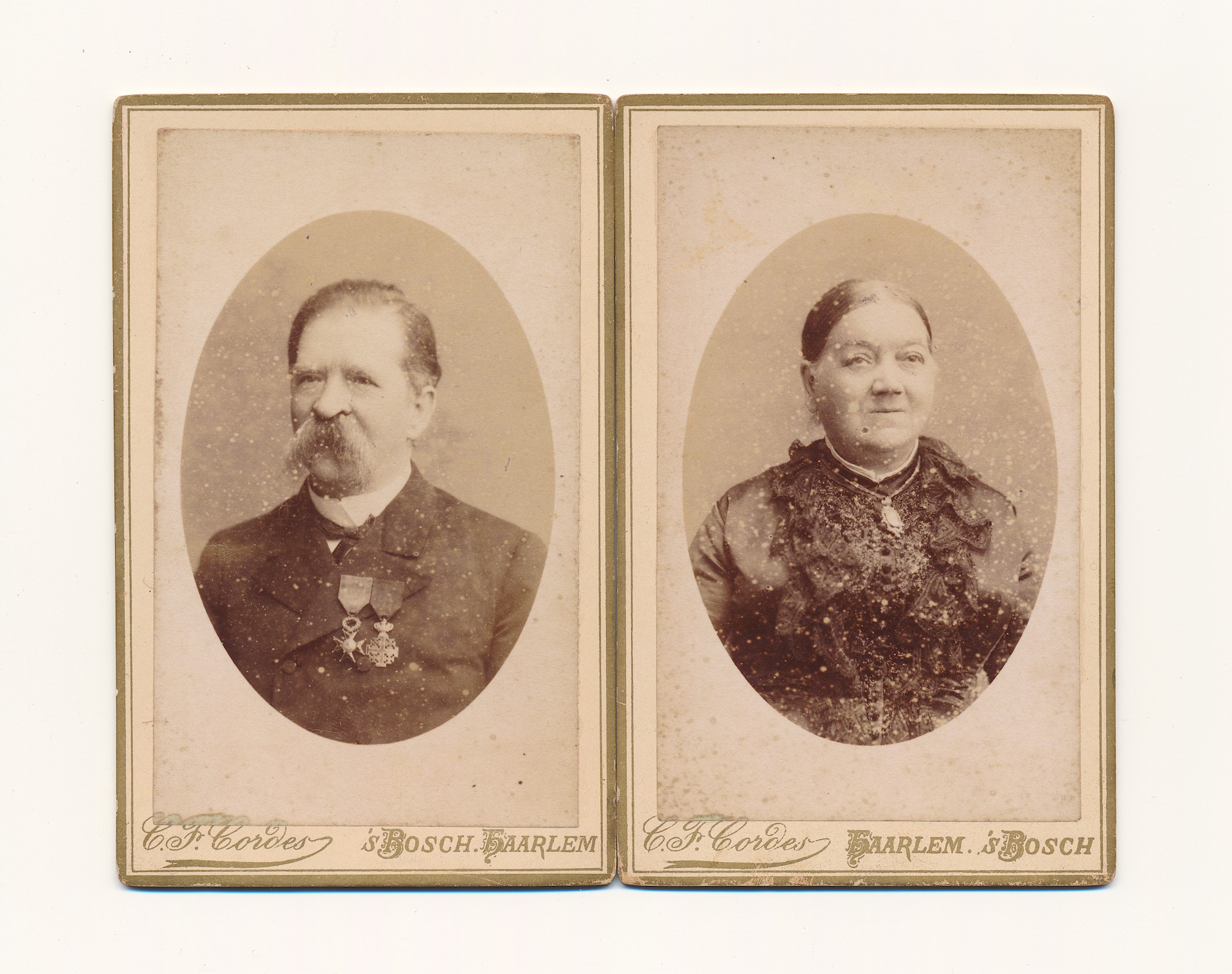
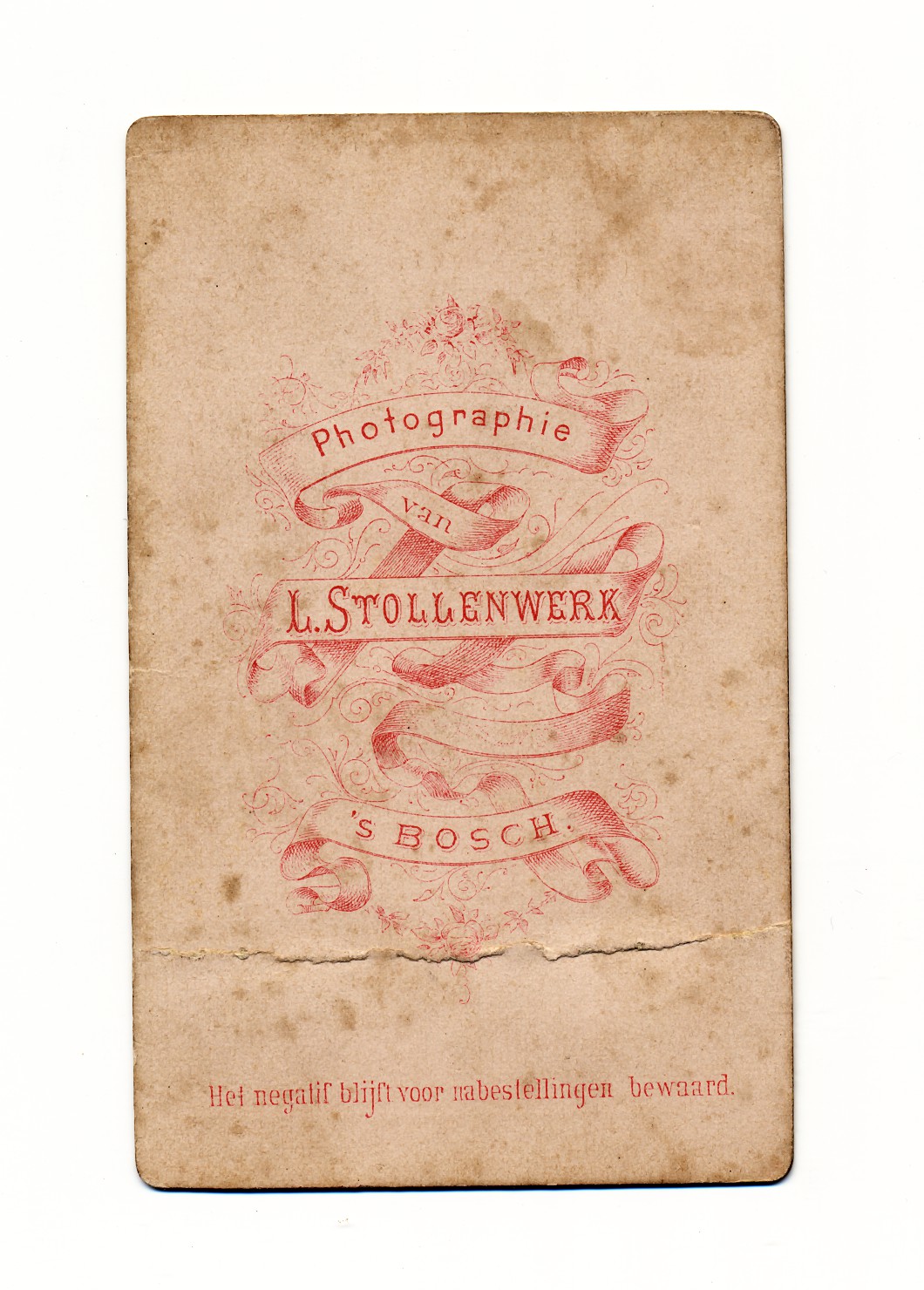
A double, not-yet-cut cdv plate with a man with two decorations and an older woman. Produced by C.F. Cordes, ’s-Hertogenbosch/Haarlem. Carel Frederik Cordes (1851–1927) took over L. Stollenwerk’s studio in ’s-Hertogenbosch in 1882. Names not known.
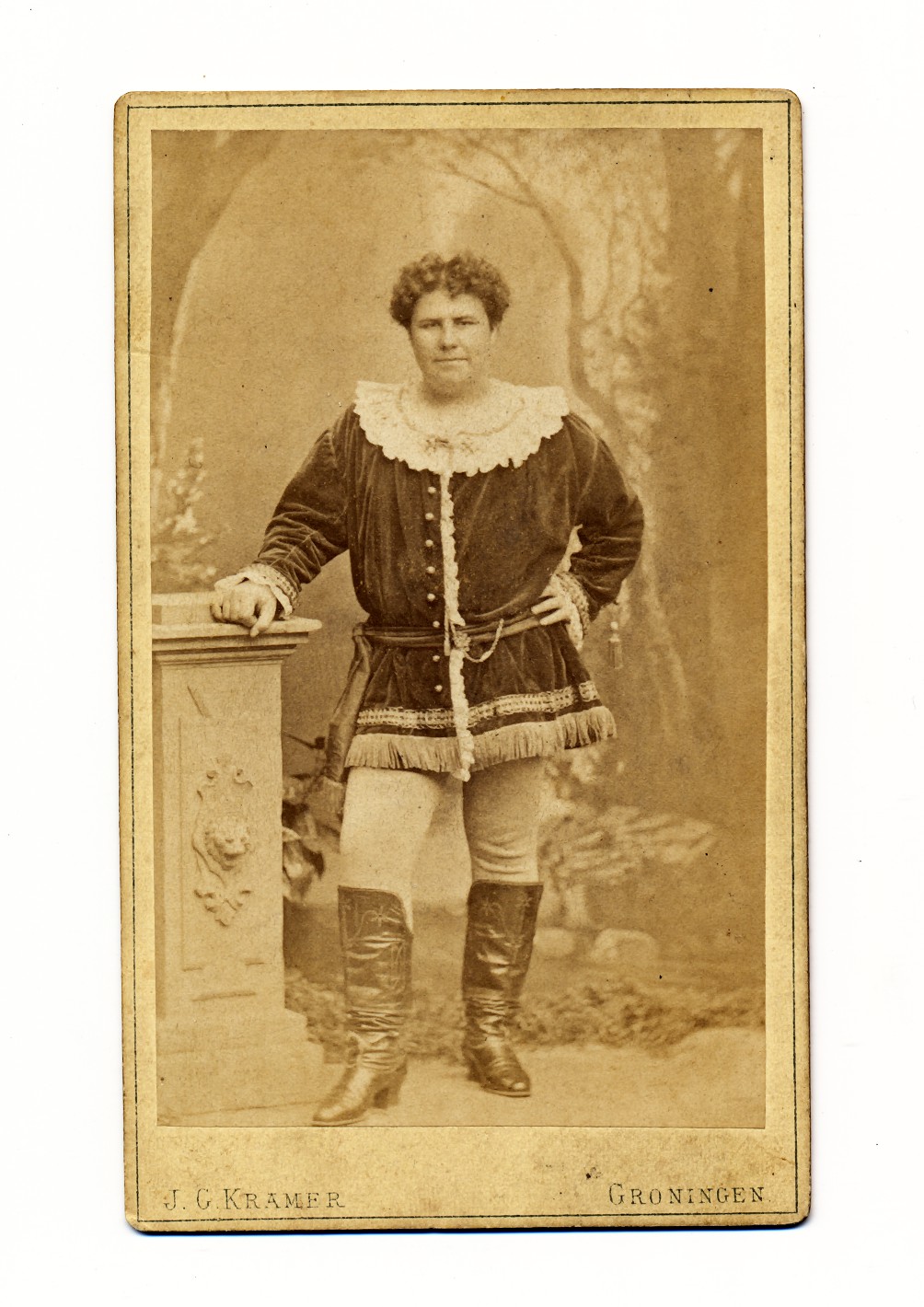
A woman in a theatrical page costume with high boots, possibly a student theatrical photograph. Produced by J.G. Kramer, Groningen (1845–1903), who was particularly known for his student portraits. Name not known.
A man in a uniform coat with a decoration and sword, in front of an illustrated Italian backdrop. Produced by L. Stollenwerk, ’s-Hertogenbosch. Name not known.
Leonard Stollenwerk ran a ‘Photographisch Atelier’ in ’s-Hertogenbosch from 1864 to 1883 (source: RKD).
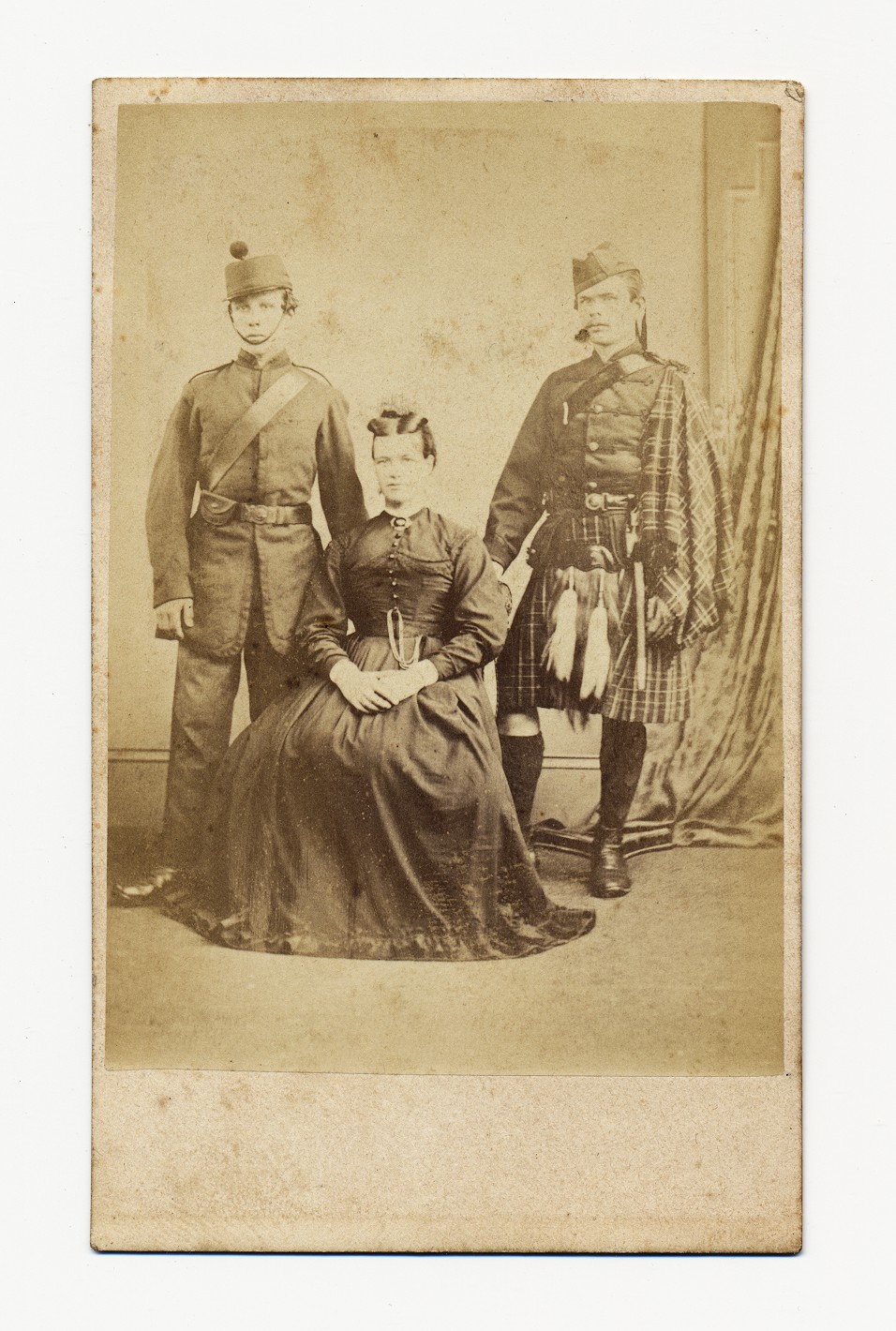
A soldier, a seated woman and a man in Highland uniform — the style matches the portraits by McFarlane, Crieff (Scotland), possibly the same family or set, but no studio stamp is visible on this print.
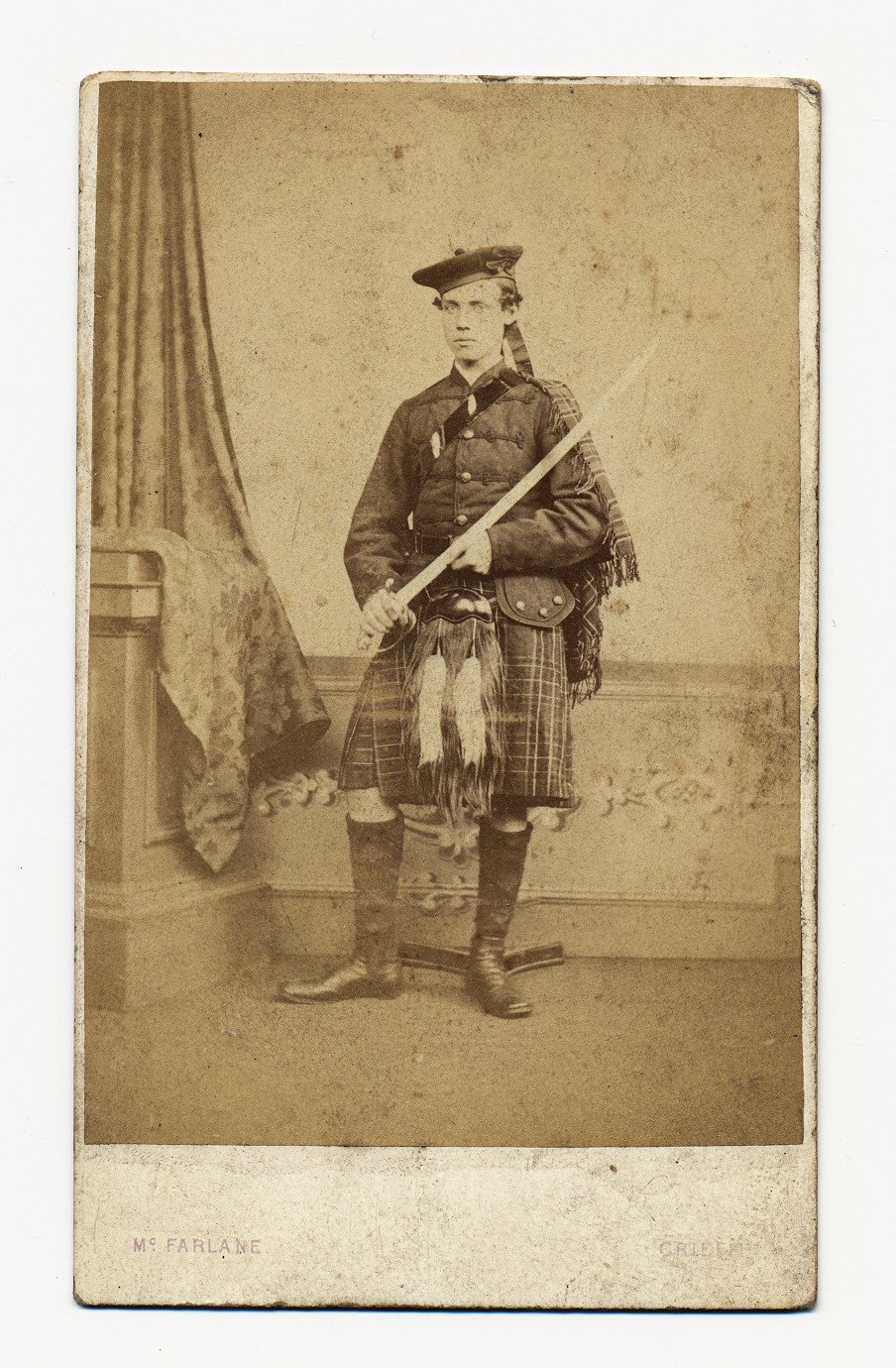
A young soldier in Highland uniform with a sword. Produced by McFarlane, Crieff (Scotland) — the same studio as the portrait of the man by the door in this collection. Name not known.
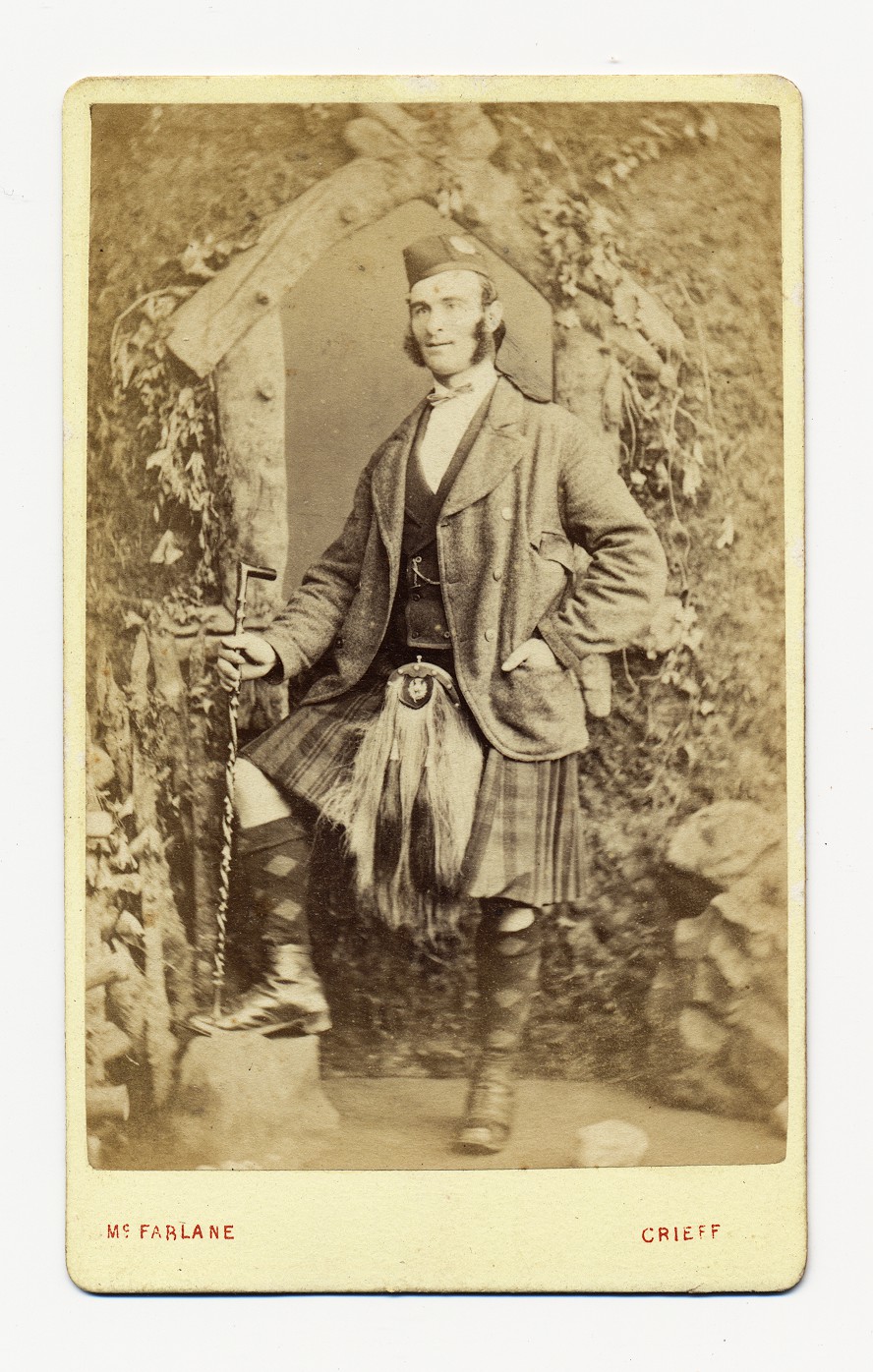
A man in Highland dress (kilt, sporran, tam o’shanter) by a rustic door. Produced by McFarlane, photographer in Crieff (Scotland), documented as active there around 1867–1868. Name not known.
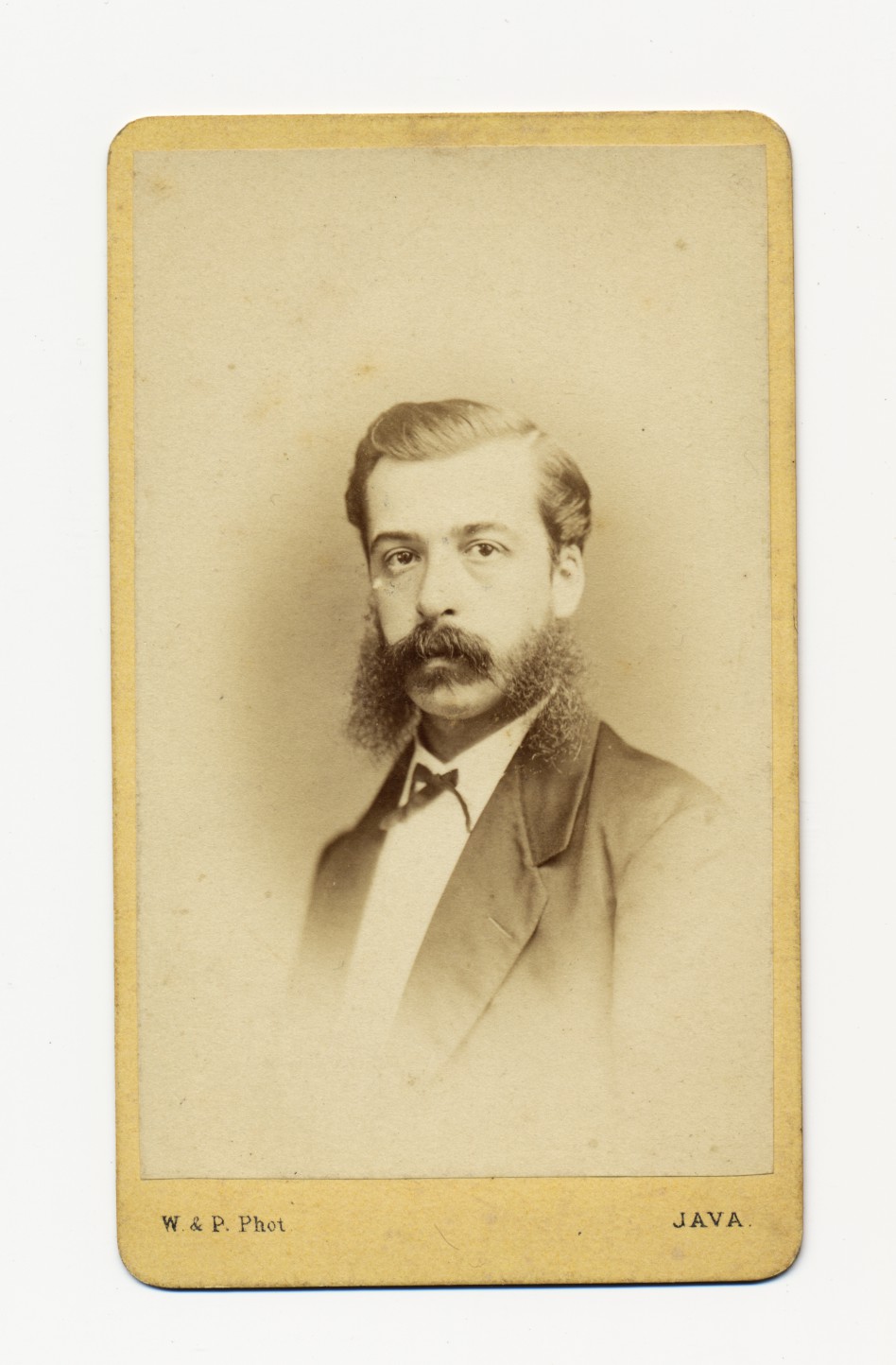
A man with impressive Franz Joseph–style sideburns. Produced by Woodbury & Page, founded 5 June 1857 in Batavia by Walter Bentley Woodbury and James Page, one of the most important photo studios of the Dutch East Indies in the 19th century. Name not known.